J.M. Molter and J.Fr. Fasch: Trisonatas in the canon-form
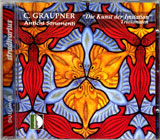
Gerd-Uwe Klein and Laura Tofetti (Violins), Tobias Bonz (Cello), Andrea Marchiol (Continuo)
|
An
extract from the Trio a 2 Violini e Cembalo g-moll
(Loading time with an 56 Kb-Modem about 75 sec.) |
 |

(Solisten: Ermes Pecchenini, Benedetto Dall'Aglio)
Concerto a Fagotto (Solistin: Györgyi Farkas)
Concerto a Clarino (Solist: Guy Ferber)
Concerto a Flauto Traverso (Solistin: Aki Matsushige)
Concerto a 2 Clarini (Solisten: Michael Maisch & Fritz Schuler)
|
An
extract from the Concerto a Fagotto
(Loading time with an 56 Kb-Modem about 75 sec.) |
|
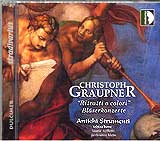
Both recordings are released by Stradivarius. In autumn 2006 the program "Duo" will be recorded as well as in summer 2007 a third CD with works by Christoph Graupner.
- A shortened extract from the booklet of the CD -
Boundless creativity, the curious looking for novel combinations of instrumental timbre and a tireless enthusiasm for hard work have lead to an outstanding catalogue of works in the baroque age: in the fifty-one years which he spent at the court of Darmstadt, Christoph Graupner composed over 100 symphonies, 80 overtures (which show his fondness for the French style then in vogue), some 50 concertos for one or more soloists (which show he was also at ease with Italian forms), over 1400 sacred cantatas (meaning more than one cantata every fortnight), as well as saecular cantatas, operas, suites of Tafelmusik, trio sonatas, partitas for keyboard, canons, preludes, fugues and so on.
Graupner's concertos employ an astonishing twenty-one solo instruments or instrumental combinations. This is remarkable in light of the conditions which Graupner must have been working under at a court where financial difficulties where the order of the day and where the composer could never be sure who would be available to play or how good they were. Graupner got round the latter problem by managing to attract freelance solo players - often excellent musicians from Leipzig who he had known for a long time - to Darmstadt with special compositions. Yet it is apparent that none of Graupner's work was intended as a showcase for the composer's prowess or the player's virtuosity, indicating an artist who always kept faith with his principles and never "sold out" to the dictates of fashion.
For example, in his double-concertos Graupner integrates the soloists with the orchestra in a fascinating combination of light, shade and colour not unlike the approach taken by the impressionists some 150 years later. This was also one reason for us to allowe ourselves a few liberties with the scoring in what we believe are the best interests of the originals. Thus the violins are occasionally backed up by an additional flute or oboe, bringing out the specific character of a particular movement.
The present recording, then, provides an opportunity to discover an unjustly neglected, masterful and innovative exponent of the late baroque, a period which would soon be drawing to a close.
Tobias Bonz - translated by Nicholas Boini